Blood - we absolutely can't do without it. One donation from you, a completely ordinary Tuesday errand, can end up helping three different patients. Curious how that math works, and why the Red Cross was down to less than a day's supply of the most common blood type this summer? Read on, then roll up a sleeve at the Rotary Club of Ojai Blood Drive.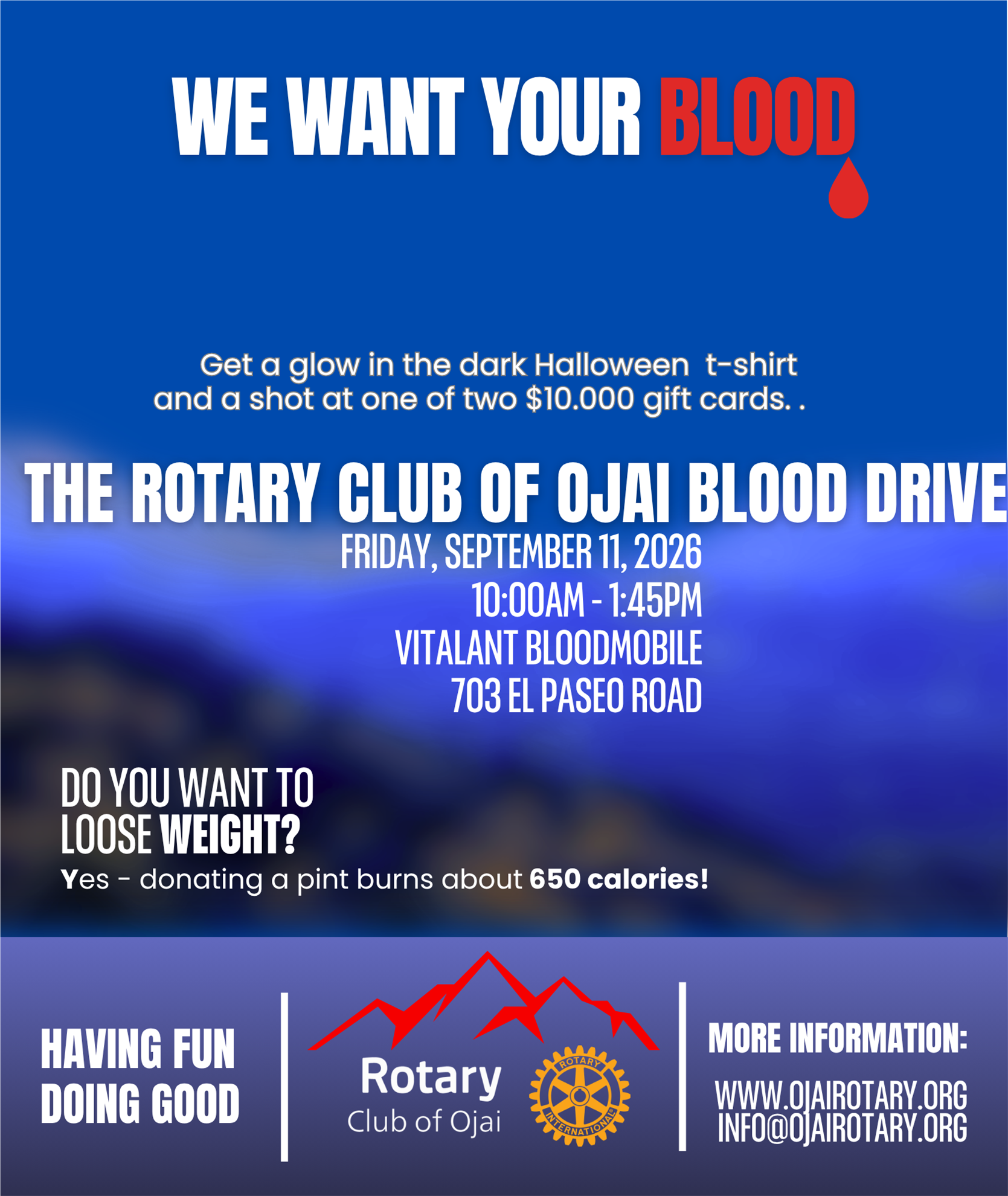
Your Blood Is Actually Really Interesting
Here's the strange part about blood donation: you can't buy it, manufacture it, or synthesize it in a lab. Every unit that's ever helped a trauma patient, a cancer patient, or a mother in a difficult delivery came from someone rolling up a sleeve. That's still true in 2026, and it's not close to changing.
The need is constant. Someone in the U.S. needs blood roughly every two seconds - for surgeries, chemotherapy, chronic conditions, emergencies. One pint, separated into red cells, plasma, and platelets, can end up helping three different patients. And yet only about 3% of people who are eligible to donate actually do it in a given year. That's not a guilt trip, just the math on why turnout for a Tuesday blood drive matters more than it looks like it should.
This isn't hypothetical. As recently as this summer, the Red Cross had less than a single day's supply of type O positive blood on hand nationally, the most commonly transfused type, and had to start rationing it to hospitals. Supply has recovered some since, but the Red Cross says it's still running low heading into fall.
Your body doesn't mind, either. Fluid levels are back to normal within a day. Red blood cells fully rebuild in about four weeks, and the iron you gave up returns within roughly two months. In the meantime, replacing what you donated costs your body somewhere in the neighborhood of 650 calories - one of the few genuinely good side effects of doing something generous.
The process itself is unglamorous in the best way: fill out some paperwork, answer some health questions, sit for about ten minutes while a pint is drawn, eat a cookie. Fifteen separate tests get run on your donation before it ever reaches a patient, which is either reassuring or a little funny, depending on your mood that day.
Rotary Club of Ojai partners with Vitalant to bring the bloodmobile to town a few times a year. It's not a big ask, and the impact is oddly disproportionate to the effort involved.